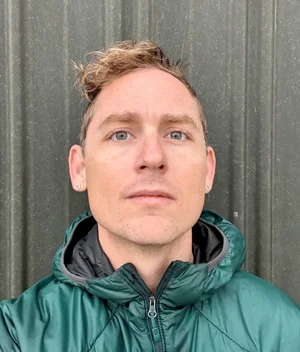
My Name is for You
It must have been the case in the 80s that parents presumed their offspring would grow to prefer blending in with the crowd. Consequently, I have rarely been the sole Michael in any group of a certain size. It’s the variety so common that I actually get called Matt once a quarter - sure, it works just as well. I take no pride in my name. Hell, it’s not even my “real” one: David is, which I much prefer simply because it’s also my father’s. I’ve trained my ear to answer to both. After all, my name is merely a sound you can make, a combination of letters you can type, in order to get my attention (and probably several other Michaels or Davids nearby). My name is for you.
Others feel differently, to be sure: in fact, my dear friend recently reclaimed her first name in a gesture to step into her power, for example (I’m so proud to know you, Rachelle.) But I assume even she would agree that a name serves no purpose for one stranded alone on an island. Indeed, as my therapist pointed out, she hardly wakes up every morning muttering to herself “I’m Kiki the therapist.” She doesn’t think about her name until someone else uses it.
She made this point to validate me when, in one of our sessions, I happened upon a self-discovery about my gender. Just that morning, lost in my daily-jog thoughts, the obvious confronted me: “if gender is a social construct, that means it’s… social.” As a construction, it was produced and shaped by society, by us, and continues to be. It exists in the spaces between us, rather than enclosed in any individual’s body or heart. One’s self-perception matters, of course: do not get me wrong. But how you see yourself in relationship to others - and how others perceive you - is where gender resides. Or so I riffed to Kiki.
I have understood myself to be nonbinary for a long time. Somewhat tongue-in-cheek, I initially disclosed that to the internet as “not not nonbinary,” that “I just want to be one of the girls.” But I haven’t bothered with changing my pronouns because to adopt they/them or she/her, heretofore, offers me little comfort. He/him does not offend me, in turn. But other words do. When men call me “dude” or “bro” or “guy” in an attempt to connect over our shared masculinity (and shared patriarchy), I shrink away. I feel no solidarity with men in whatever manhood is. It so often feels like my physical presentation is betraying my personhood.
Moreover, when anyone assumes that I cannot nurture my children nor care for anyone the way women do, I feel violated. I may not be a mother, but I am a parent who mothers. You see me out and about with my daughters and may think “oh how cute, a girl-dad.” No. I aspire to motherhood, an aspiration for that which is both sacred and mundane. I am not cisgender. I am not a father, at least not in the way you may assume.
This is not news, not to me anyway. What’s changed is how much I care about what you may think when I tell you I’m nonbinary. In particular, I fear you will assume I have ever experienced discrimination. Far from it. I swim in a sea of privilege. But I want to be seen. (This is the part of my therapy session when sobbing took over). I want to feel less alone. I seek my most authentic self, to be truly known. My own liberation may depend on it. And I am not responsible for your assumptions about my own lived experiences.
Just like my name, my pronouns are not for me, they’re for you. To disrupt your assumptions about me. To signal something more. So, hey, I’m Michael (who cares) and I use he/they pronouns (for now) and if that helps you see me one iota more clearly, then I take some comfort in that.